
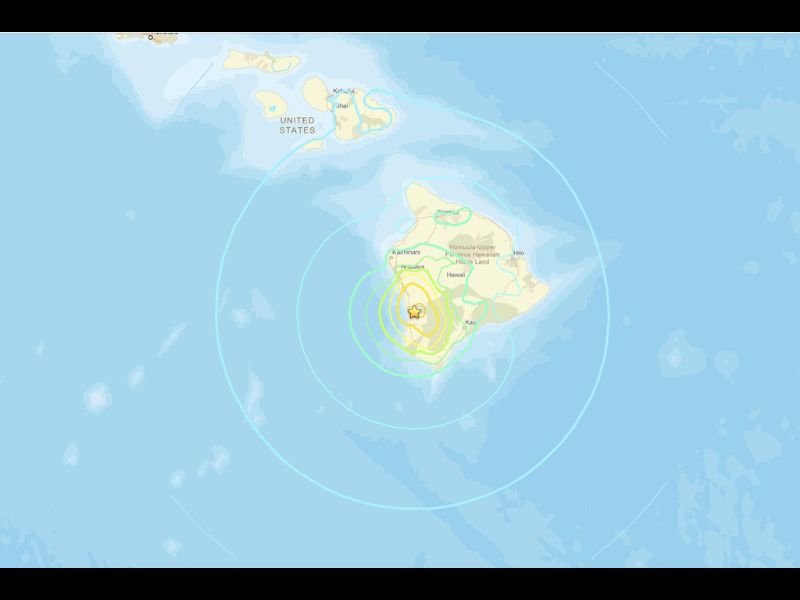
Magnitude 6.0 Earthquake Strikes Hawaii at 14 Miles Deep With No Tsunami Generated According to Tsunami Warning Center Saturday May 23
HAWAII — A magnitude 6.0 earthquake struck Hawaii on Saturday, May 23, 2026, occurring at a depth of 22 kilometers or 14 miles due to oblique reverse faulting on the Big Island. The Tsunami Warning Center has confirmed no tsunami has been generated from this event, offering significant relief for coastal communities across the Hawaiian Islands and the broader Pacific region.
Magnitude 6.0 Strike Caused by Lithospheric Flexure Below the Big Island
According to the USGS tectonic summary, the earthquake was caused by lithospheric flexure resulting from the immense weight of the Hawaiian Islands pressing down on the underlying oceanic plate. This mechanism is a well-documented and recurring cause of large magnitude earthquakes at this depth range beneath Hawaii.
The event epicenter is centered on the Big Island with seismic wave rings extending outward across the surrounding Pacific Ocean zone. The depth and location are consistent with the typical pattern of earthquakes generated by this type of crustal loading process beneath the islands.
Event Not Related to Magmatic Processes According to USGS Tectonic Summary
The USGS tectonic summary specifically notes that the May 23 earthquake is not directly related to magmatic processes based on its depth, location, and observed mainshock-aftershock behavior. This distinction is important as it separates this event from volcanic activity associated with Hawaii’s active magma systems.
The typical mainshock-aftershock pattern observed with this event further supports the USGS assessment that lithospheric flexure rather than volcanic or magmatic activity is the driving mechanism. Residents should anticipate the possibility of aftershocks following the mainshock as the crust adjusts.
No Tsunami Generated but Residents Should Monitor Official Updates for Aftershocks
The Tsunami Warning Center’s confirmation that no tsunami has been generated removes the most immediate large-scale threat to Hawaiian coastal communities and surrounding Pacific islands. However, a magnitude 6.0 event at this intensity warrants continued monitoring for any aftershock activity through the hours following the mainshock.
Residents across the Big Island and surrounding Hawaiian Islands should stay connected to official USGS and emergency management updates as the aftershock sequence develops. Structural checks of buildings and infrastructure in the areas closest to the epicenter are advisable following any significant seismic event of this magnitude. Stay with NapervilleLocal.com for the latest weather updates and local forecast coverage.

I’ve lived in Naperville long enough to see how quickly our community changes — from new developments downtown to sudden shifts in our Midwest weather. Reporting on Naperville news and daily forecasts gives me the chance to keep neighbors informed about what really matters. My goal is simple: deliver clear, timely updates so you always know what’s happening in our city and what to expect from the skies above.